
Male Pelvic Floor Physical Therapy
Pelvic floor dysfunction in men is common. But you don’t have to live with it in silence.

Yes, men have a pelvic floor, too.
The pelvic floor isn’t a women’s issue, it’s a human issue. Men have the same group of muscles at the base of the pelvis, and those muscles play a critical role in bladder and bowel control, sexual function, core stability, and athletic performance. When something goes wrong there, it affects all of those things.
Many of the men we’ve treated have had to quietly manage symptoms for months or years. Sometimes because they don't know PT can help, they didn’t want to bring it up in the first place, and sometimes because they've already been told the symptoms are just part of aging, part of surgery recovery, or something they have to accept.
None of those things are true. Pelvic floor dysfunction in men is highly treatable, and the research is clear that physical therapy is one of the most effective interventions available, often more so than medication alone.
We’ve worked with men who had no idea physical therapy could help them.
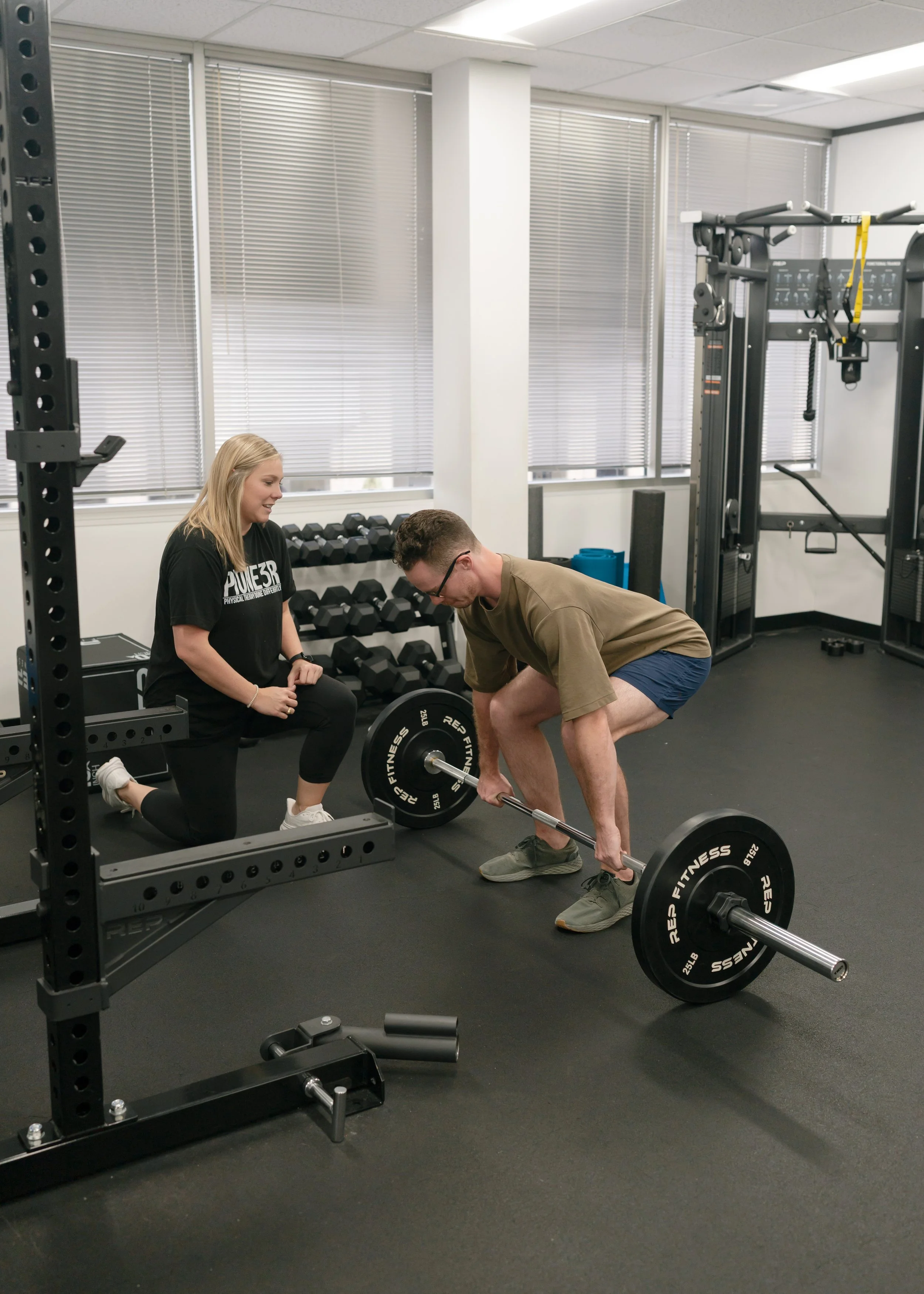
The man in his 50s who started leaking after prostate surgery and was told to just "give it time." The weightlifter with pelvic pressure or pain during heavy training that he's been ignoring for two years. The man experiencing pelvic pain that his doctor couldn't explain and wasn't sure where to send him.
Different situations, but all real and very treatable.
If you’ve been struggling with pelvic floor symptoms, allow us to help you to build up to a life where things things aren’t even on your mind.
What we can help with:
Bladder & Bowel Symptoms
Urinary leaking or incontinence
Urinary urgency or frequency
Difficulty fully emptying the bladder
Constipation or painful bowel movements
Post-void dribbling
Pelvic Pain
Chronic pelvic pain or pelvic floor tension
Tailbone, perineal, or rectal pain
Pain with sitting for prolonged periods
Pain or discomfort with sexual activity
Unexplained groin, hip, or low back pain
Post-surgical Recovery
Urinary incontinence after prostatectomy
Pelvic floor rehabilitation after prostate cancer treatment
Recovery from hernia repair or abdominal surgery
Erectile dysfunction related to pelvic floor tension
Athletic Performance
Groin pain or adductor tightness that won't resolve
Core instability affecting training or sport
Pelvic floor optimization for heavy lifting
Hip pain with a suspected pelvic floor component
Most men dealing with this have never been told physical therapy could help. Now you know.
Pelvic floor dysfunction in men is almost never met with a referral to PT. Perhaps you’ve see a urologist, get medication, or are told to wait it out. Or you don’t tell anyone at all because it doesn't feel like something you’re supposed to talk about.
Physical therapy is one of the most effective and most underutilized treatments for male pelvic floor dysfunction, and most men who come through our door say the same thing: they had no idea this existed, and they wish they'd known sooner.
And if you feel a little awkward about coming in, that's normal. We've got you.
We treat pelvic floor dysfunction the same way we treat a shoulder injury or a running knee: clinically, professionally, and with your goals at the center of everything.
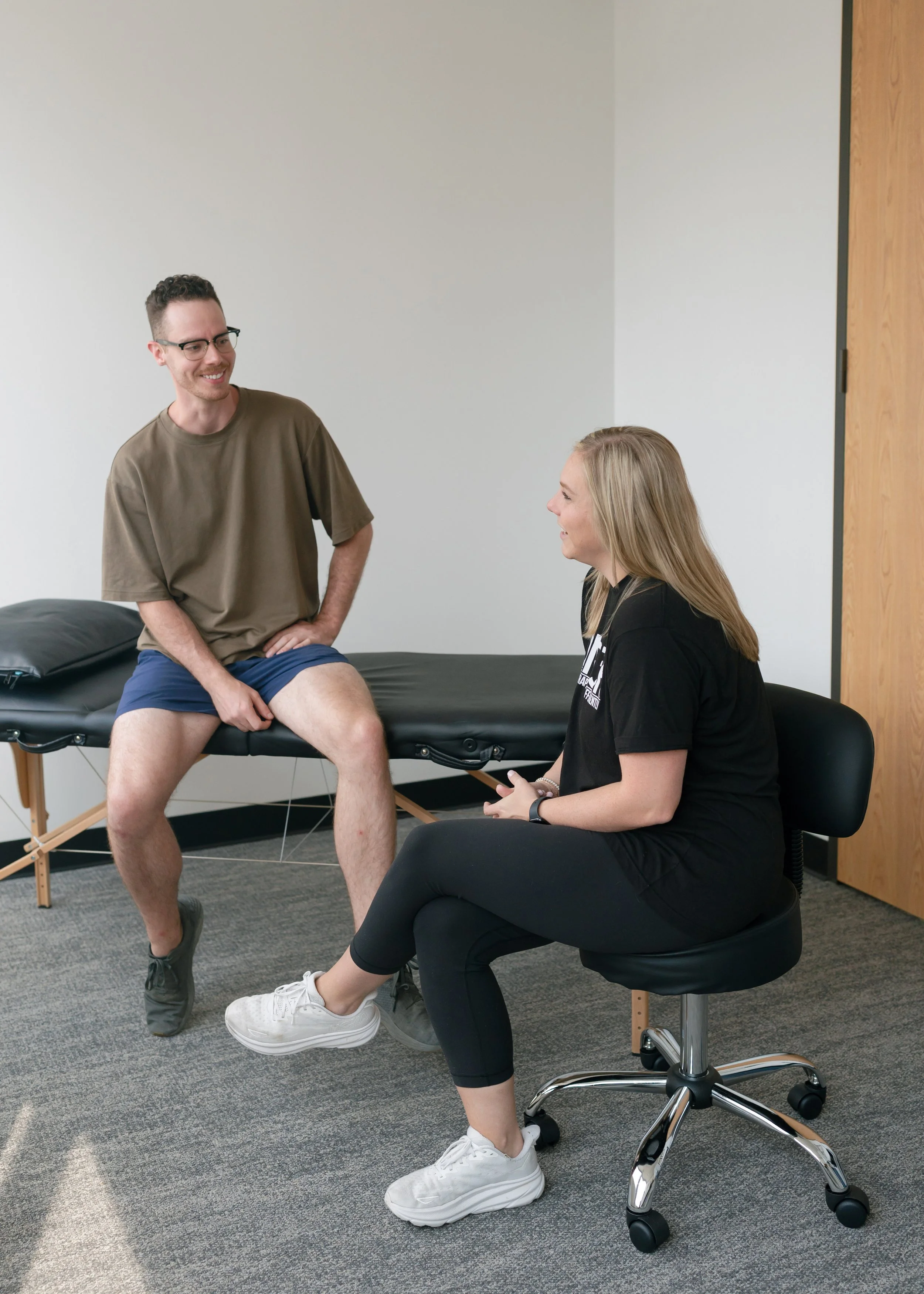
You'll know exactly what we're doing and why before we do anything. Every step is explained. Every assessment is optional. And every session is one-on-one.
The hardest part is making the call. We'll take it from there.
Questions we hear often:
-
The pelvic floor is a group of muscles at the bottom of your pelvis. They attach from your pubic bone to your tailbone and are between your sit bones. This group of muscles is important for support of your pelvic organs; imperative for your pelvic function: peeing, pooping, sexual health and function, & birth. It is a key part of the core. .
-
Pelvic health physical therapy sessions do not look much different than an orthopedic therapy session, however as a pelvic floor therapist, we are able to view things through a different lens.
The pelvic floor functions in conjunction with the whole body. We will do more than just look at the back or hips, but look at you as a whole. If you are leaking while jumping, our goal is to break down the pieces that contribute and get you back to jumping without leaking.
Sometimes an internal examination is indicated where your physical therapist will examine the pelvic floor musculature internally. If this is indicated, your physical therapist will discuss this with you and only include this if consent is fully given.
-
Not necessarily, and never without your full understanding and consent. An internal assessment can provide valuable information for certain conditions such as pelvic pain, post-surgical recovery, and some types of urinary dysfunction, but many men are treated effectively with external assessment and movement-based approaches. We'll always explain what we're recommending and why, and you're in control of what you agree to.
-
Not at all. We work with men across the age spectrum: young athletes with groin or hip pain, men in their 30s and 40s with chronic pelvic tension or urinary urgency, and older men recovering from surgery or managing symptoms of aging. Pelvic floor dysfunction doesn't have an age requirement.
-
Yes, and it's one of the most well-supported uses of pelvic floor PT in men. Urinary incontinence after prostatectomy is extremely common, but it responds well to targeted pelvic floor rehabilitation. Most men see meaningful improvement with consistent PT, and many achieve full continence. The earlier you start, the better. It's never too late.
-
Chronic pelvic pain in men is frequently undertreated because it's underdiagnosed. Many men with pelvic floor dysfunction are sent to urologists or told nothing structural is wrong, without anyone looking at the muscles themselves. Pelvic floor PT specifically addresses the muscular and movement components of pelvic pain, which are often the missing piece. We can't promise results without evaluating you, but this is exactly the type of case we're trained to assess.

What life looks like on the other side.
Imagine training without pelvic pressure or groin pain you've been working around for years. Or making it through a long meeting or a long run without urgency dictating your decisions. Recovering from surgery faster and more completely than you expected. What if you could have an understanding what's actually happening in your body and having the tools to stay ahead of it?
Come in with a problem that limits your daily life, and leave with a plan and understanding of how to live a life with more freedom from your symptoms.
That's the goal. And it's more achievable than most men realize.